Test Tube Baby
Introduction
The term test tube baby often sounds mysterious, but it simply refers to a child conceived via in vitro fertilization (IVF). In IVF, eggs and sperm meet in a lab and the embryo is placed in the uterus, just like a natural pregnancy from that point onward. This guide turns the science into plain English so you can make confident choices.
You’ll learn what a test tube baby really means, how the IVF process works day by day, and who it helps. We’ll also cover success rates, common risks, costs, and practical tips that save time and reduce stress. If you’ve heard stories about the first test tube baby and wondered whether she’s still alive, you’ll get a clear answer here too.
Along the way, we’ll bust a few myths, show you how to read clinic data, and point you to trusted resources. Whether you’re just starting to research fertility options or comparing clinics, this article is designed to answer real questions and respect your time. Let’s begin with the meaning behind the name.
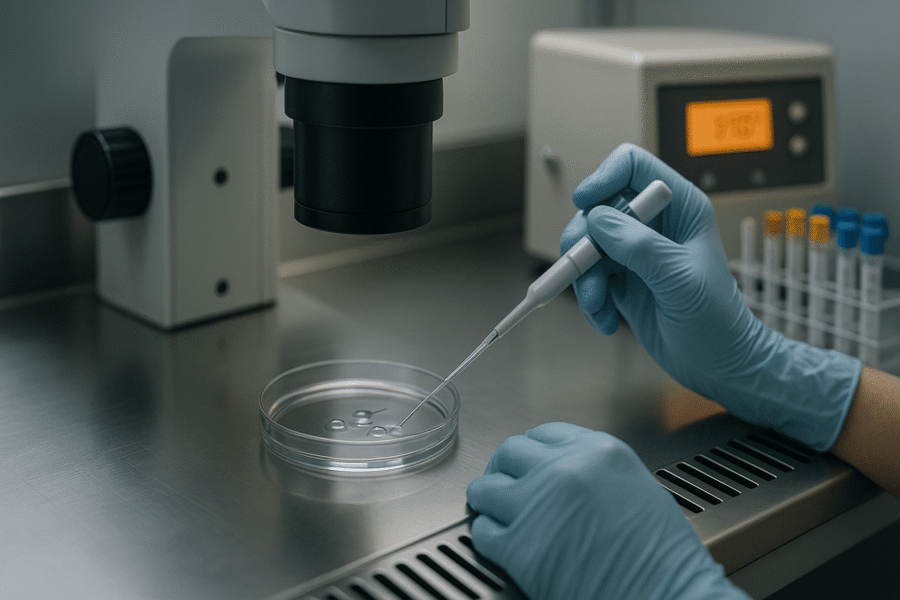
What is a “test tube baby”? (Simple meaning)
A test tube baby is a baby conceived through IVF—In Vitro Fertilization. In vitro means “in glass,” so fertilization happens in a controlled lab environment, usually in a small culture dish rather than an actual test tube. Once a healthy embryo forms, it’s transferred into the uterus to try for pregnancy.
Who IVF helps
Doctors recommend IVF for blocked or damaged fallopian tubes, endometriosis, ovulation problems, male-factor infertility, or when other treatments like IUI haven’t worked. IVF also supports patients who need donor eggs or sperm, want to test embryos (PGT) for specific genetic conditions, or plan fertility preservation by freezing eggs or embryos.
The IVF process: step-by-step
1) Ovarian stimulation
You’ll take hormone injections for about 8–12 days so multiple follicles grow. Ultrasounds and blood tests track progress, and your team schedules a trigger shot to mature the eggs.
2) Egg retrieval
In a short outpatient procedure under light anesthesia, a thin needle guided by ultrasound gently collects mature eggs from the ovaries. Most people go home the same day and rest.
3) Fertilization in the lab
There are two main approaches. In standard IVF, washed sperm are placed with each egg so fertilization can occur. In ICSI (intracytoplasmic sperm injection), an embryologist injects a single sperm into an egg, often used for male-factor infertility or previous poor fertilization.
4) Embryo culture
Fertilized eggs (zygotes) grow for 3–6 days in incubators that mimic the body’s environment. Clinics may grade embryos by appearance and development. Some patients choose PGT to screen embryos for chromosomal or specific genetic conditions.
5) Embryo transfer
A soft catheter places one embryo into the uterus, typically under ultrasound guidance. Many clinics encourage single embryo transfer (SET) to minimize twins while maintaining strong outcomes. Remaining good-quality embryos can be frozen for later transfers.
6) The two-week wait
About 9–14 days after transfer, a blood test checks hCG to confirm pregnancy. If positive, additional tests and scans monitor early development.
Success rates and what affects them
IVF results vary widely by age, diagnosis, embryo quality, and clinic protocols. Younger patients generally see higher success per transfer, while chances decline with age due to egg quality. Look at live-birth per transfer and per retrieval, and don’t forget cumulative success across all embryos from one retrieval—often the best indicator of your real odds.
Quick reading tips for clinic data:
- Compare outcomes within your age group.
- Favor single-embryo transfer stats to see modern practice.
- Use a cumulative chance estimate over one or more transfers.
Risks and side effects (briefly)
Most patients tolerate IVF well, but side effects can include bloating, mood changes, and injection-site soreness. OHSS (ovarian hyperstimulation syndrome) is less common today thanks to safer protocols, yet still important to discuss. Procedure risks from retrieval are rare. Multiple pregnancies raise maternal and neonatal risks, which is why SET is widely used.
First test tube baby: is she still alive?
Yes. Louise Joy Brown, born July 25, 1978 in England, was the world’s first baby conceived by IVF. She is alive and well and has spoken publicly about her life. Her birth—led by Robert Edwards and Patrick Steptoe—opened modern fertility care and gave millions of families new paths to parenthood.
How many IVF babies worldwide?
Estimates now place global births from IVF and related assisted reproductive technologies in the many millions and rising each year as access improves. National registries and international groups update totals regularly, reflecting rapid growth in both treatment options and success rates.
Typical IVF timeline
- Consultation & testing: 2–6 weeks, depending on labs and schedules
- Stimulation to retrieval: ~2 weeks
- Transfer: fresh (day 3–6) or frozen in a later cycle
- Pregnancy test: ~9–14 days after transfer
Costs and access
Costs vary by country, clinic, medications, and add-ons like ICSI, PGT, and freezing/storage. Some nations or insurers fund part of treatment, while others require private payment. When comparing clinics, weigh outcomes, lab accreditation, counseling quality, and transparency as much as price.
Myths vs facts (fast clarity)
- “Babies are grown in a test tube.” Fertilization happens in a dish; pregnancy develops in the uterus.
- “IVF always means twins.” Modern single-embryo transfer greatly reduces multiple pregnancies.
- “Success rates are the same for everyone.” Age, diagnosis, and embryo quality matter—use age-matched data.
Practical tips before starting
- Ask how your AMH, antral follicle count, and semen analysis shape protocol design.
- Plan for more than one transfer; cumulative chances matter.
- Clarify freezing policies, storage fees, and options for unused embryos.
- Prepare for the two-week wait with support and realistic expectations.
FAQs
What’s a test tube baby in simple words?
It’s a baby conceived via IVF, where eggs and sperm meet in the lab and the resulting embryo is placed into the uterus. The term “test tube” is shorthand; the process uses culture dishes and precise lab techniques.
Who was the first test tube baby, and is she still alive?
Louise Brown was the first, born in 1978 in the UK. She is alive and has shared her experiences widely, highlighting how normal her life has been and how far fertility care has come.
What are typical IVF success rates?
They depend on age, diagnosis, and embryo quality. Younger patients tend to have higher rates per transfer, but your most realistic picture comes from cumulative success over all embryos from a single retrieval.
Conclusion
The phrase test tube baby may sound complicated, yet it describes a well-studied, carefully controlled process that has helped millions. IVF brings eggs and sperm together in a lab, then returns the embryo to the uterus so pregnancy can progress naturally from there. With the right plan and team, the odds can be encouraging, especially when you consider cumulative chances across transfers.
History proves the point. The first test tube baby, Louise Brown, is alive and well, and her birth marked a turning point in modern medicine. Since then, techniques have become safer, more precise, and more personalized, giving families more options than ever before.
If you’re considering IVF, compare age-matched results, confirm single-embryo transfer expertise, and ask clear questions about protocols, costs, and support. Your next step: read our IVF Cost & Financing Guide or explore CDC/SART clinic data to build a confident plan. And if you’ve walked this road, share your experience in the comments—your story can light the way for someone else.
About the Author